Etched in Three Days: The Clear-Coat Countdown Behind a Black Golf's Bird Stain
The bit of car care nobody wants to talk about
There are glamorous detailing topics, and then there is bird mess. Nobody books a full paint correction because they are excited about guano. But ask anyone who has owned a black car near the coast, under a tree, or within a seagull's flight path of a chip shop, and you will hear the same story: it looked like a smear, it sat there for a few days, and then it would not wash off.
That is because bird droppings are not simply dirt. They are a chemical event. And on a modern car with a clear coat, that event has a clock attached to it.
What is actually happening on your paint
A modern paint system is not just colour. Above the base coat sits a clear coat, typically a polyurethane-based layer that carries the gloss, the UV resistance and the scratch protection. It is tough, but it is not invincible.
Bird droppings arrive with a payload: uric acid, digestive enzymes, and whatever else the bird has been eating. Add a bit of moisture from dew or rain, plus heat from a black bonnet sitting in the sun, and you have a small chemistry set on your paintwork. The acid starts to soften and attack the clear coat. The enzymes get to work on organic material. The sun warms it all up and accelerates the process.
On a cool, damp day, you might get away with more time. On a warm day with a dark panel, you might not. Black paint is particularly unforgiving because it absorbs heat and shows every mark, so the damage that would be a faint shadow on a silver car can look like a crater on a black one.
Three days, one seagull, one black Golf
A few months back, a customer brought us a black Golf that had been parked near the coast for a long weekend. It had been left under a tree, which is never a neutral decision, and a seagull had made its feelings known on the bonnet and the top of the offside wing. The car was washed once at home, but the marks remained. By the time it reached us, the droppings had been on the paint for roughly three days.
Under the inspection light, the picture was clear. The bonnet had two distinct rings where the mess had sat. The centre of each ring had already etched into the clear coat. The surrounding area was stained but not yet etched. A normal wash did nothing. A clay bar did nothing. This was not surface contamination; it was a change in the paint surface itself.
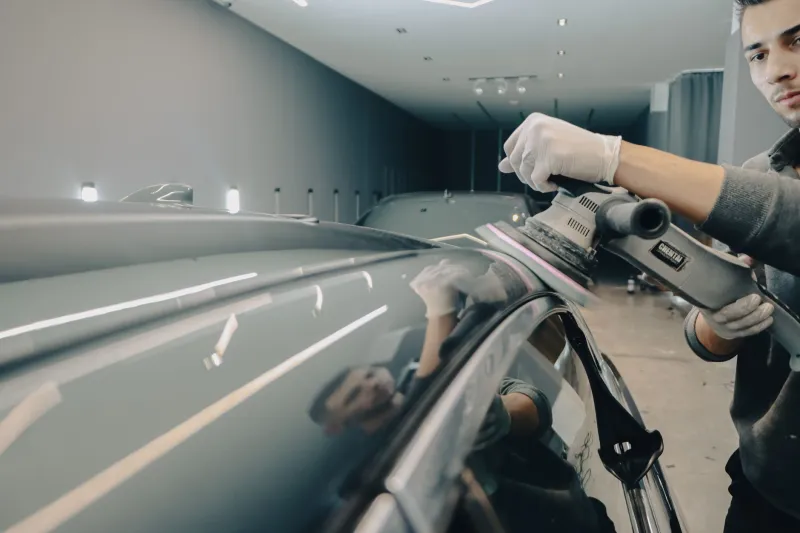
We took paint thickness readings first, because you always do before machine polishing. The readings were healthy, which gave us room to work. We then used a fine compound on a soft foam pad to level the etched area, followed by a refining polish to restore gloss. The bonnet came back beautifully, but it took time, light and a measured approach. Had the car been left another week, especially in warm weather, we would have been talking about wet sanding or, in the worst case, a repaint of the panel. That is the difference between a detailing job and a bodyshop job.
The four stages of bird mess
It helps to think of bird dropping damage in stages.
Stage one: fresh. The mess is still on the surface. It has not yet bonded or etched. This is the easy stage. Remove it gently and you will likely have no lasting mark.
Stage two: stained. The clear coat has been affected at the very top but not deeply. A wash will not fix it, but a light polish usually will. This is where many cars sit after a couple of days.
Stage three: etched. The acid has eaten into the clear coat. You can feel a slight depression with a fingernail, and the mark remains after washing. Machine polishing can often level it out, but it depends on depth and remaining clear-coat thickness.
Stage four: permanent. The damage has gone through the clear coat or is too deep to safely polish. At this point you are looking at repainting the panel. It is rare from a single dropping, but it happens when mess is left for weeks, or when a car sits in repeated cycles of sun and rain.
The Golf was between stage two and stage three. That is a very common place to land after a long weekend.
How to remove it without making it worse
If you find bird mess on your car, resist the urge to scrub it with a dry cloth or your fingernail. Clear coat is soft enough to marr with a fingernail, and you will trade one defect for another.
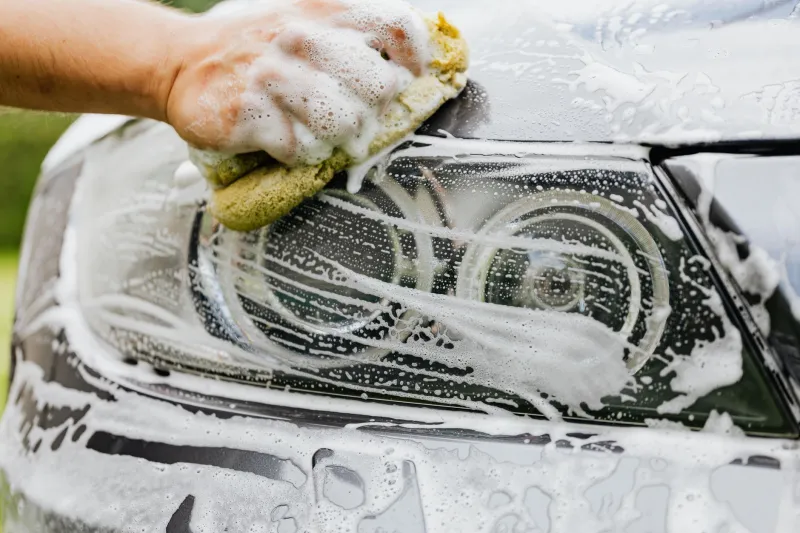
The safer routine is simple. Soak the area with a dedicated bird dropping remover, or a pH-neutral shampoo solution, and give it a few minutes to soften. Lift the mess away with a soft, wet microfibre. Do not rub hard. Rinse the area afterwards. If a mark remains after washing and rinsing, do not attack it with abrasive polish in direct sun on a hot panel. Wait until the paint is cool and use the least aggressive method first.
And if the mark is still there after a proper wash, that is your signal that the clear coat has been affected. At that point, it is a polishing job, not a cleaning job.
Where ceramic coating fits in
A ceramic coating does not make your car immune to bird mess. Nothing does. What a good coating does is buy you reaction time. The hydrophobic surface encourages the mess to sit on top rather than bond as aggressively, and it makes removal easier. It also adds a sacrificial layer that the acid has to work through before it reaches the clear coat.
That does not mean you can leave a dropping on a coated car for a fortnight and expect no consequences. It means the window between 'wipe it off' and 'book a polisher' is wider. On an uncoated car, that window can be short. On a well-coated car, you have a bit more breathing room, especially if you deal with it promptly.
For anyone who parks under trees, near the coast, or on a driveway that seems to be on a pigeon flight path, a coating is less about showroom gloss and more about chemical insurance. The gloss is a bonus. The time is the point.
The takeaway
Bird mess is not a cosmetic nuisance. It is a small, time-sensitive chemical attack on the most vulnerable layer of your paint. The difference between a quick wash and a machine polish is often measured in days, not weeks, and on a black car in warm weather those days can disappear faster than you think.
If you spot it, deal with it. If you cannot deal with it today, deal with it tomorrow. And if it has already left a mark that will not wash away, get it looked at before the sun and the acid finish the job.