Two Owners, One Question: Is It Worth Detailing a Car That Just Sits at the Station?
Photo: CZmarlin — Christopher Ziemnowicz, a photo credit would be appreciated if this image is used anywhere other than Wikipedia. Please leave a note at Wikipedia here. Thank you!, CC BY-SA 4.0, via Wikimedia Commons
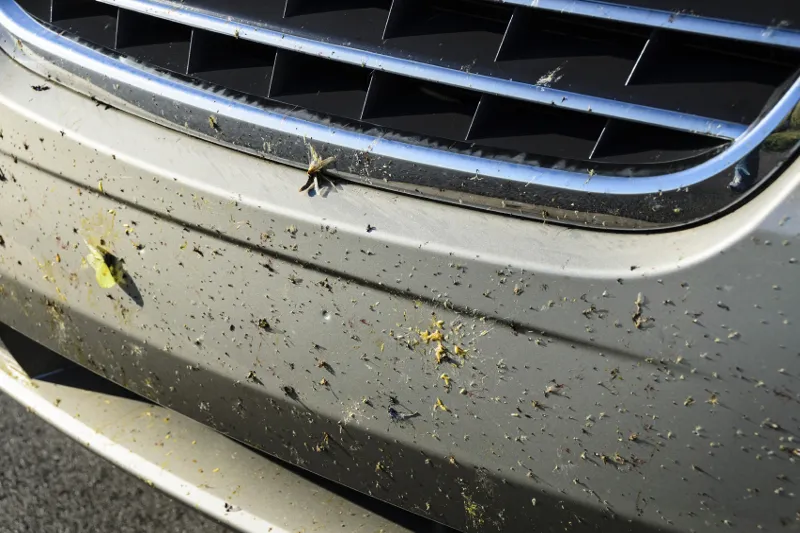
There's a particular kind of car that haunts every railway station car park in Britain. It's clean-ish. It's sensible. It does the same 1.2-mile run to the park-and-ride every morning, sits under a tree all day collecting pigeon deposits, then does the same run home. Nobody looks at it. Not even its owner.
So when a customer rang us last spring asking whether it was "a bit mad" to spend money protecting exactly this kind of car, we realised the honest answer was: it depends. And rather than fudge it, we decided to put the question to two owners who've taken opposite paths — and then work out what each choice actually costs.
Meet the Believer
Dave from Solihull drives a three-year-old Mazda 3. He works in Birmingham, commutes by train, and last year had us carry out a single-stage correction and apply a ceramic coating. Total spend, just over £700.
His reasoning was refreshingly unromantic. "I keep cars ten years," he told us. "I don't care what it looks like at the station. I care what it's worth when I sell it, and I care that it doesn't need polishing every summer." Dave's previous car went to the dealer with swirled, tree-sap-spotted paint and lost him a chunk off the part-exchange figure. He wasn't making that mistake twice.
There's also the tree factor. His driveway sits under two mature sycamores, and the honeydew they drop through summer is genuinely corrosive if left. A coated car shrugs off most of it between washes; an uncoated one doesn't.
Meet the Sceptic
Then there's Priya, also in the West Midlands, also a train commuter, driving a two-year-old VW Golf. She washes it herself every fortnight with a proper two-bucket method, applies a spray sealant a couple of times a year, and has spent — in her own words — "about forty quid, ever."
"It's a commuter car," she said. "If I spent £700 on it, I'd be protecting a car that spends eight hours a day in a car park. The money made more sense going into a decent dashcam and new tyres." And honestly? It's hard to argue with her maths on those two.
The Cost-Per-Year Reckoning
Here's roughly how it shakes out for a car kept five years, which is typical for this kind of owner.
The coated route: around £700 upfront for correction plus coating. Spread over five years, that's £140 a year. Add two professional maintenance washes a year at £40 each and you're at £220 annually. The offset: a properly maintained, corrected car typically commands £400–£800 more at resale than a swirled equivalent, and it photographs better when you list it privately, which is where the real money is.
The DIY route: call it £50 a year in products and maybe a weekend of your time each quarter. Over five years, £250. The offset: you'll almost certainly accumulate swirl marks from hand-washing — even careful people do — and the resale hit eats a chunk of the saving.
The gap between the two paths, over five years, is smaller than most people assume. It's not £700 versus nothing. It's closer to £1,100 versus £250, with a resale difference clawing back several hundred pounds of that.
So Who's Right?
Both of them, honestly. The case for coating a commuter car rests on three things: you keep cars a long time, the car has decent paint worth preserving, and it lives under trees or in exposed parking. Tick all three and Dave's approach is the sensible one.
But if you're planning to change the car within two or three years, or it's a base-trim model where paint condition barely moves the needle on value, Priya's forty-quid-and-a-fortnight routine is entirely rational. A ceramic coating is an investment in a future sale you may never make.
The one thing we'd say to both camps: whichever path you pick, pick it deliberately. The worst outcome isn't choosing wrong — it's drifting into the middle, spending £300 on random products that half-work, and ending up with a car that's neither protected nor cheap to run. If you're unsure which camp your car falls into, that's exactly the conversation we have with customers every week — and it costs nothing to ask.