500 Miles, Three Products, One Very Dirty Bonnet: Our Motorway Protection Shootout
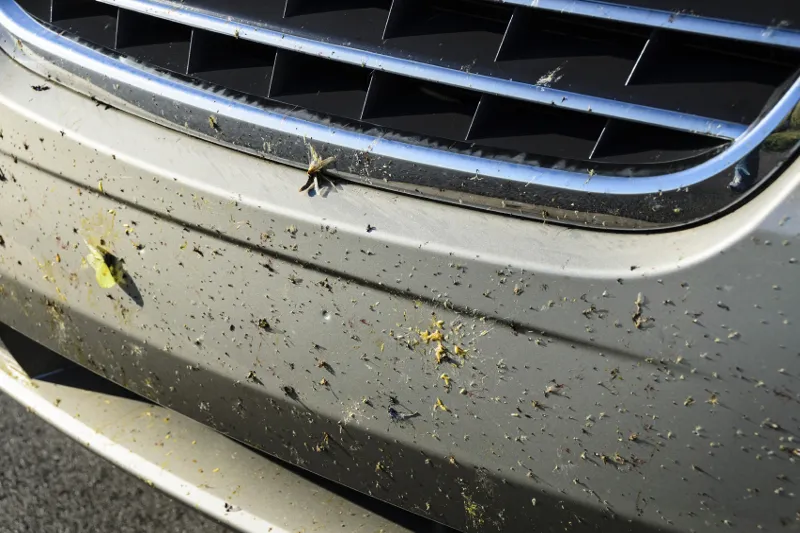
Photo: dirty car bonnet after long motorway drive insect splatter, via s25180.pcdn.co
The Setup: One Car, Three Treatments
There's a lot of marketing nonsense in this industry. Bottles promising twelve months of hydrophobic glory, waxes claiming to be 'space age', sprays that sound like they were invented by NASA. So rather than argue about it in the workshop, we decided to do what we do best: test the claims against something every British driver dreads — a long run up the motorway network in mixed weather.
The vehicle: a colleague's Audi A4 in Brilliant Black, which is a polite way of saying it shows every single mark. We split the treatment into three zones:
- Bonnet and roof: a premium ceramic spray sealant, cured properly over 24 hours
- Doors and rear quarters: a good old-fashioned carnauba paste wax, two thin coats
- Bumper and mirrors: a well-known quick detailer applied as a stand-alone layer
Then we drove. Manchester to Inverness, a loop through the Cairngorms (because why not add grit and forestry dust to the mix), and back down the M6. Roughly 500 miles of everything the UK road network could throw at us — light drizzle, a downpour near Carlisle, and enough insect life around the Scottish borders to feed a small colony of bats.
Round One: Bug Splatter and Motorway Film
If you've never cleaned a windscreen at a petrol station outside Perth at 7am, you haven't lived. But the windscreen isn't the test — the test is what clings to your paintwork after hundreds of miles of 70mph impacts.
The ceramic spray sealant zone came off best by a clear margin. Bugs that had baked onto the bonnet lifted with a damp microfibre and minimal pressure. More importantly, the water behaviour stayed tight and beady even after the Carlisle monsoon. Motorway film — that faint, greasy haze that builds up along leading edges — was barely present.
The carnauba zone looked gorgeous for the first 150 miles. There's a warmth and depth to a proper paste wax that sprays simply don't replicate, and on the doors it still read beautifully in the low Scottish sun. But the leading edges of the rear quarters collected film noticeably faster, and bug removal took more elbow grease than we'd have liked.
The quick detailer zone, predictably, was hanging on by a thread. By Inverness it had all but vanished from the bumpers, and the mirrors showed spotting after the first wash-free rain cycle. As a stand-alone protection for a long trip? Not a chance. As a top-up between washes? Fine. As armour? No.
Round Two: The Service Station Jet Wash
Every road tripper knows the temptation. You pull in, the car's filthy, and there's a £1 jet wash staring at you like a beacon of hope. So we used one. Deliberately. On the rear bumper. Because nobody follows the rules all the time.
The results were instructive. The jet wash stripped what little detailer remained and left spotting where the water had dried in the sun. The waxed panels shed water surprisingly well post-blast, though the wax layer itself is thinner after a hit of high-pressure water. The sealed bonnet, which we didn't jet wash but did rinse at home afterwards, recovered its beading immediately with just a proper two-bucket wash.
The lesson here isn't 'never use a jet wash' — it's that a cheap wash brush dragged across unprotected paint does far more damage than the water itself. Protection gives you a sacrificial layer so that when you do clean the car, you're not grinding grit into clear coat.
What We'd Actually Recommend
If you're doing a proper UK road trip — North Coast 500, a run down to Cornwall, whatever takes your fancy — here's the honest hierarchy:
- Best overall: A properly cured ceramic spray sealant, ideally topped up the week before you leave. Best durability, easiest cleaning, least stress.
- Best looking (short term): Carnauba wax. Accept that it'll fade faster on leading edges and take a bottle of detailer for touch-ups.
- Best used as backup: Quick detailer in the door pocket for removing fresh bugs before they bake on. Ten seconds of wiping at a services saves twenty minutes of scrubbing later.
One final tip that cost us nothing and saved hours: pack a small bottle of bug remover and a couple of microfibres. Insects are acidic, and left on paint in summer sun, they'll etch through wax, sealant and eventually clear coat. Wipe them off at your next fuel stop and your paint will thank you at the other end.
Five hundred miles later, the verdict is simple. If you want your car to come home looking like it left, seal it properly before you go — and save the quick detailer for the windscreen, where it belongs.