The £600 Question: What Ceramic Coatings Actually Do (And What the Brochure Won't Tell You)
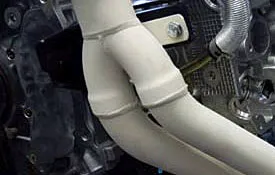
Photo: http://www.zircotec.com, Attribution, via Wikimedia Commons
Let's be honest from the off: there's a lot of nonsense spoken about ceramic coatings. Scroll through social media and you'll see cars beading water like they've just come out of a sci-fi film, with claims of five, seven, even nine years of protection. As a studio that applies these coatings week in, week out, we're here to tell you what's real, what's exaggerated, and what you should actually spend your money on.
What a Ceramic Coating Actually Is
Strip away the jargon and a ceramic coating is a liquid polymer — usually silicon dioxide (SiO₂) suspended in a solvent — that chemically bonds to your paint's clear coat as it cures. Once cured, it forms a hard, sacrificial layer that's far more resistant to chemicals and UV than any wax or sealant.
That's it. That's the technology. It's genuinely impressive chemistry, but it's not sorcery, and it doesn't make your paint invincible.
What It Genuinely Does Well
Chemical resistance. Bird lime, tree sap, road salt, and the alkaline nightmare of snow foam and traffic film all attack your clear coat. A cured ceramic layer buys you time — those contaminants sit on the coating rather than eating into the lacquer. In a UK winter, when councils are dumping grit and brine across every A-road from November to March, that matters.
Easier washing. The slickness and hydrophobics mean dirt struggles to bond. Washes take less effort, drying is quicker, and you're far less likely to inflict swirl marks dragging a filthy mitt across resistant grime.
UV stability. Wax is gone in weeks under British summer sun. A decent coating shrugs it off for years.
What It Doesn't Do
Here's where the marketing departments earn their commission:
- It's not scratch-proof. It's harder than wax, not harder than a key ring in a pocket or an automatic car wash brush. Coatings resist minor marring; they don't stop damage.
- It doesn't eliminate maintenance. "Self-cleaning" means easier to clean, not never. Coated cars still need proper washing — arguably more carefully, because you want that coating to last.
- It doesn't fix bad paint. A coating locks in whatever's underneath. If your paint is swirled and dull, that's a job for paint correction first — and that's a separate cost entirely.
Real-World Longevity in the UK Climate
Manufacturers love quoting maximum lifespan under ideal conditions. Reality check for Britain:
- DIY consumer coatings (£30–£100): realistically 12–18 months of solid performance. Some claim three years; most are well past their best by year two.
- Professional-grade coatings (£400–£900 including prep): genuine 3–5 years with sensible maintenance. Five-plus is achievable on a garaged weekend car, less likely on a daily driven estate that lives on a street in Manchester.
The single biggest factor isn't the product — it's the prep. A professional application includes decontamination and machine polishing to correct the paint first. You're paying as much for labour and skill as for the bottle.
The Honest Cost Breakdown
Daily driver, £15k family SUV: A £600 coating is hard to justify unless you keep cars for 5+ years and hate valeting. A quality sealant applied twice a year (£20 and an afternoon) delivers 80% of the practical benefit.
New car, three-year PCP, no garage: A mid-tier professional coating (£400–£500 with light correction) is reasonable. It'll look after the paint through the whole finance term and help at resale.
Pride and joy, weekend use: This is where coatings earn their keep. Paint correction plus a premium coating (£700–£1,000) makes sense when the car genuinely matters to you.
Lease car you'll hand back: Don't bother with anything beyond a good sealant. Fair wear and tear won't care about your beading water.
When PPF or a Sealant Is the Smarter Buy
If your concern is stone chips on a motorway-heavy commute, paint protection film beats ceramic every time — it's a physical barrier, at a price (typically £1,200+ for the front end). Many of our customers combine both: PPF on impact zones, ceramic on the rest.
And if you simply enjoy washing the car yourself every fortnight? A £25 sealant and a decent routine is a perfectly honourable choice. We'd rather you enjoyed the car than felt obliged to buy technology you don't need.
The Bottom Line
Ceramic coatings are excellent technology wrapped in exaggerated marketing. Buy one for the right reasons — chemical protection, easier maintenance, long-term gloss — not because a video promised a self-healing force field. And whichever route you go, remember: the prep is the product. A cheap coating applied over neglected paint is money poured down the drain.
If you're on the fence, ask us. We'd rather talk you into the right solution than the expensive one.