Five Days in a Somerset Field: What Glastonbury Actually Does to Your Fiesta
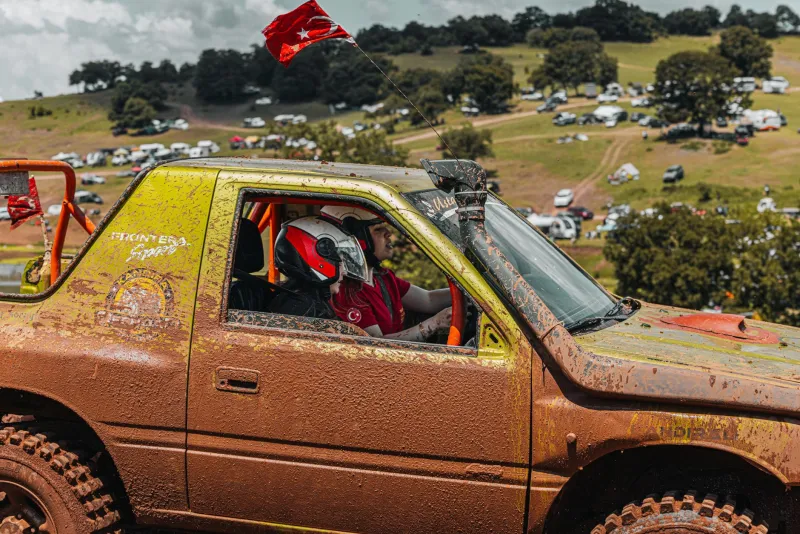
Every summer, thousands of Britons drive perfectly good cars into a field, park them in a churned-up meadow for the best part of a week, and then act surprised when the poor things come out looking like they've been through a blender.
We know, because one of them arrived at our unit on a Tuesday morning. A 2015 Fiesta in Race Red — well, theoretically Race Red — fresh from five days at Glastonbury. The owner was refreshingly honest: "It's been rained on, beer'd on, and slept next to a generator for a week. Do what you can."
Here's what we did, and more importantly, why it worked.
The Festival Cocktail: Worse Than You Think
Field mud isn't just dirt. Agricultural land — and Somerset is proper agricultural land — carries residual fertiliser, livestock runoff and a whole mineral profile that's far more aggressive than the road grime your car normally collects. Left to bake on a bonnet in the sun, it bonds to the paint and starts etching.
Then there's the drinks. Dried lager is essentially a sugar-and-acid film. Spill a pint on a roof or bootlid, let it cure in the sun for two days, and you've got a stain that laughs at a basic wash.
Add tent straps rubbing against door edges during loading, a car park's worth of door dings from fellow festival-goers, and — in this case — a mysterious tar-like substance near the rear arch that turned out to be tractor-related. It's a uniquely British form of automotive abuse.
Step One: The Pre-Wash (Where Most People Go Wrong)
The single biggest mistake we see with post-festival cars is someone attacking dried mud with a sponge. That's how you grind fertiliser-laden grit into your lacquer and turn a decontamination job into a correction job.
Instead: a thorough pre-wash with a snow foam or dedicated traffic film remover, left to dwell and break down the organic matter before a single mitt touches the paint. On the Fiesta, the first foam rinse ran brown for a solid four minutes. Four minutes.
Step Two: Chemical Decontamination
After the safe wash, we moved to the chemical stage. An iron remover — the purple one, as everyone calls it — targeted the brake dust and industrial fallout embedded around the wheels and lower panels. Then a tar and glue remover dealt with the tractor deposits and the sticky residue along the door shuts where tent straps had been tied.
The strap scuffs themselves were interesting. They'd left light marring along both front door edges — not through to primer, but enough to catch a fingernail. That's machine polishing territory, not polish-and-pray.
Step Three: Correction and the Verdict
The etching from the dried beer on the bootlid was the deepest damage — faint ghosting where the sugars had attacked the clear coat. A two-stage machine polish on that panel brought back about 95% of the gloss. The door edge marring polished out completely.
Final tally: roughly nine hours of work on a car that cost £11,000 new. The owner's reaction when he collected it — circling the car twice, checking the bootlid against a photo on his phone — is why we do this.
Your Post-Festival Checklist
If you've just driven out of a field, do these things in order, ideally within a week:
- Rinse, don't scrub. Pressure rinse or foam first. Never dry-wipe dried mud.
- Wash top-down with the two-bucket method. The lower panels carry the worst contamination.
- Chemical decontaminate — iron remover on the lowers and wheels, tar remover on any sticky patches.
- Inspect in direct sunlight. Etching and marring hide under cloud cover and garage lighting.
- Protect immediately. A quality sealant or, better, a ceramic coating gives the next festival (and the next winter) something to fight against.
One last thought: if your car is about to do festival season, get protection on it before you go. A ceramic coating won't make the mud slide off on its own, but it dramatically reduces how well any of it bonds — which turns a nine-hour rescue into a two-hour wash.
Worthy Farm is beautiful. Your paintwork doesn't have to pay for it.