Algae, Arch Gaps and a 10am Deadline: The Morning We Rescued a Silver Shadow Before the Bells
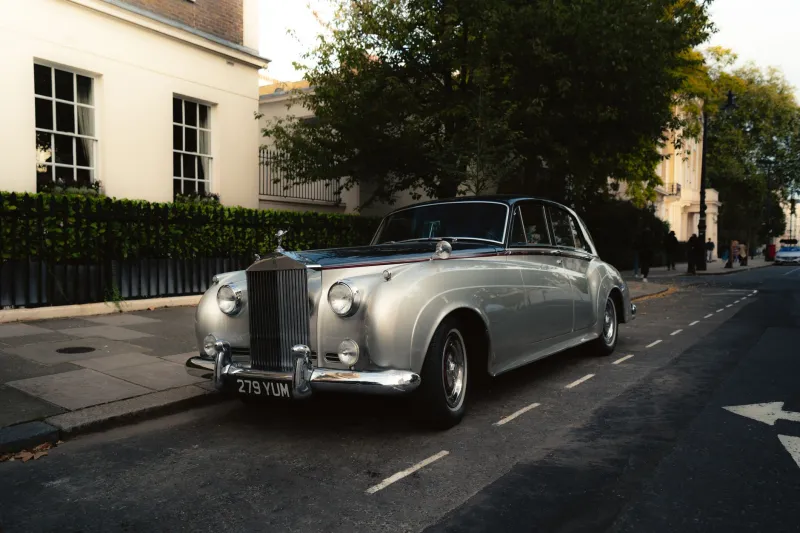
The phone call came at 6:40 on a Saturday morning. Not the sort of call we usually take, but the voice on the other end had that particular panic you only hear from a best man whose plan has come apart at the seams.
"It's my uncle's Silver Shadow. He's lending it for the wedding. I said I'd clean it. I've just looked at it. Can you help?"
We were at his uncle's place in Solihull by 7:15. Ceremony at noon. Photos from 11:30. Which meant the car — all nineteen feet of it — had to be done and parked by eleven. Four hours, give or take.
What We Found Under the Sills
Classic cars that sit in damp garages develop their own ecosystem. This one had been off the road for the best part of two years, occasionally wheeled out for family occasions and pushed straight back in. The result? A fine film of green algae along the lower sills and around the wheel arches, thriving in the grime that a quick hose-down never touches.
You can't just blast algae off with a pressure washer on an old Rolls. The rubber seals are fifty years old, the chrome brightwork has edges you don't want water forced behind, and the paint — this is the crucial bit — is single-stage, with no clearcoat to hide behind.
So: soft detailing brushes, a gentle APC diluted well down, and patience. Lots of patience. The algae lifted from the sills in slow, satisfying sheets. Door shuts came next — caked with dust that had turned to paste over two damp winters. Every shut line, every hinge, every rubber channel got a brush and a wipe. It's fiddly work nobody notices until it's not done.
Why Single-Stage Paint Changes Everything
Here's where most modern detailing advice falls apart on a classic. Your typical guide will tell you to machine polish, correct, and coat. On a 1974 Shadow, that's a fast route to disaster.
Single-stage paint has colour all the way through — there's no clear layer to sacrifice. Polish too hard and you cut through to primer. Polish too soft and you've achieved nothing. And the paint itself is softer and more heat-sensitive than anything coming out of a modern factory.
Our approach was deliberately conservative:
- Hand polish only. A fine-grade polish on a foam applicator, working small sections of the bonnet and roof to lift light oxidation. No rotary, no dual-action, no exceptions on a four-hour deadline.
- Old towels, not new microfibre. Vintage paint scratches if you look at it wrong. Fresh, plush microfibre is softer, sure — but older, well-laundered towels have zero risk of shedding fibres into trim.
- A spray sealant, not a ceramic. There was simply no time for coating to cure, and honestly, single-stage paint often doesn't bond with ceramics the way clearcoat does. A quality spray sealant gave gloss and a couple of months of protection. Right tool, right day.
The chrome got its own session — a dedicated metal polish, cotton wadding, and a level of elbow grease that had our youngest tech questioning his career choices by 9am.
The Bits That Make a Wedding Car
A wedding car isn't judged at a car show. It's judged in photographs, often with the bride's hand resting on the door. So we prioritised the parts that end up in the frame: door shuts (again), the rear deck where the ribbon goes, the interior that'll appear behind the couple in every shot.
The interior was tan leather with that unmistakable old-Rolls smell — half history, half must. A gentle clean, a feed with a proper leather conditioner, and glass so clear the chauffeur did a double take.
At 10:47, we parked it outside the venue. Two hours and fifty minutes after we started. Not perfect — a car with two years of garage dust doesn't get perfect in a morning, and pretending otherwise would be a lie. But it gleamed. In the photos, it's the Silver Shadow everyone remembers.
Borrowed Cars Deserve Better
The wobble in all this isn't the algae or the deadline. It's the assumption that a borrowed car needs nothing more than a rinse and a prayer. Whether it's a mate's classic, a relative's weekend toy, or the family car doing wedding duty — these motors carry someone else's pride. Treat them accordingly.
If you've got a big day coming and a car that hasn't moved since the last one, give us a ring before the week of the wedding, not the morning of. Though, as it turns out, we do mornings too.