Eighty Fares a Week: The Interior Restoration of a Working Private-Hire Mondeo
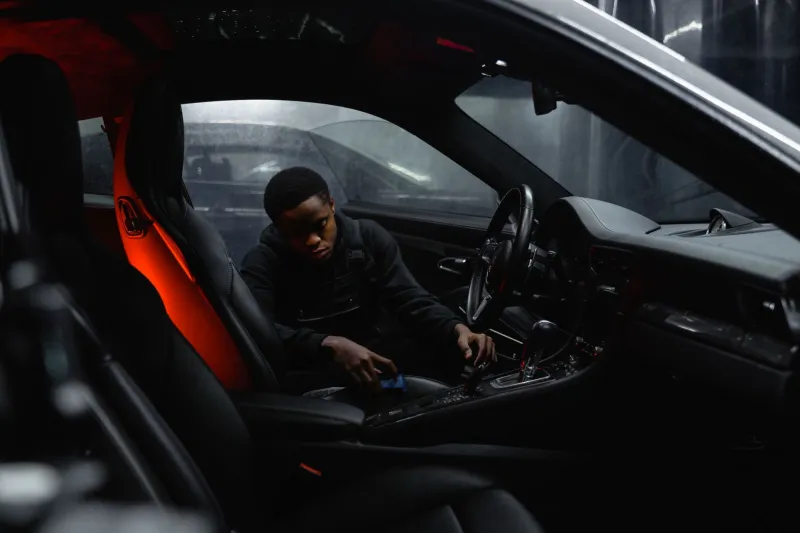
Dave has been driving private-hire in and around Manchester for eleven years. His Ford Mondeo has done just over 200,000 miles, most of them ferrying people between the airport, the station and the 6am school run. It's his office, his showroom and his livelihood — and until last month, it smelled like all three at once.
"Passengers don't say anything," he told us when he rang. "But you see them do the little window-down thing. You see them put a bag on the seat instead of sitting on it. That's a four-star review before we've even pulled away."
He wasn't wrong. When we opened the doors, we were greeted by the unmistakable aroma of eleven years of takeaway runs, and a cabin that told the story of every single fare. Here's how we brought it back — and what anyone whose car doubles as a workspace can take from it.
What 200,000 Miles Actually Looks Like
The wear on a working car isn't like the wear on a weekend motor. It's concentrated, and it's specific:
- Driver's seat bolster worn shiny from eleven years of the same entry and exit, thousands of times a week
- Rear footwells compacted with grit, sweet wrappers and the residue of a thousand rainy-night drop-offs
- Headlining carrying a faint grey film — years of hair product, cooking smells and condensation
- Door cards with scuffs at exactly the height of a commuter's laptop bag
None of it is dramatic. That's the sneaky part. Deterioration this gradual gets normalised, one shift at a time, until the driver genuinely can't smell their own car anymore. Regulars can. First-timers definitely can.
Steam, Enzymes and a Lot of Patience
We started with the extraction. Seats came out of the car entirely — you can't properly clean what you can't see, and the rails and carpets underneath were hiding a small archaeology of the last decade. A hot water extraction unit pulled shockingly dark water out of the rear seats, fare after fare's worth of body oils and spillages that vacuuming alone never touches.
The headlining was the delicate bit. You cannot scrub a headlining; the adhesive gives up and it sags, and then you've made things worse. Instead, a low-moisture steam head with a microfibre wrap, worked in short passes, lifted the film without soaking the backing. Slow, boring, effective.
For the smell — the reason Dave actually called — we went after the source rather than masking it. Enzyme-based cleaners broken down the organic residue in the carpets and seat bases (there was a story in there we chose not to investigate too closely). An ozone treatment overnight finished the job, neutralising what the enzymes couldn't reach in the ventilation system. By morning, the cabin smelled of nothing at all, which is precisely the point.
The Details That Earn Five Stars
With the deep clean done, we moved to the cosmetic work that passengers notice without knowing they've noticed it:
- Trim restoration on the scuffed door cards and the driver's bolster, turning shiny worn plastic back to a matte finish
- Glass, properly done, inside and out — smeared interior glass catches the low winter sun and makes the whole car feel tired
- Vented seat bases and dashboard detailed with soft brushes, because dust on vents is the first thing a seated passenger clocks at eye level
Dave's verdict the next morning: "It's like the first week I had it. I actually apologised to a regular for the car being too clean."
What the Rest of Us Can Steal From This
You don't need 200,000 miles on the clock to have a working car. If yours doubles as an office — delivery rounds, sales territory, the school run that never ends — the same principles apply:
- Clean the smell, not the smell of cleaner. Enzymes and ventilation beat a tree hanger every time.
- Extraction beats vacuuming. A proper wet extraction once a year does more than fifty quick vacuums.
- Don't scrub the headlining. Ever. Low moisture or leave it to someone with a steamer.
- Protect the high-wear zones. A trim dressing on the bolsters and door edges slows the shiny-wear cycle dramatically.
- Do it before you need to. Dave waited eleven years. Six months of maintenance would have kept most of this at bay.
Dave's back on the school run now, five stars across the board. His office, his showroom and his reputation — all in the same set of seats, all back to how they should be.
If your car works as hard as you do and it's starting to show, get in touch. We've seen worse. Probably.