Never Seen in Daylight: Why a Night-Shift Nurse's Mondeo Got the Full Ceramic Treatment
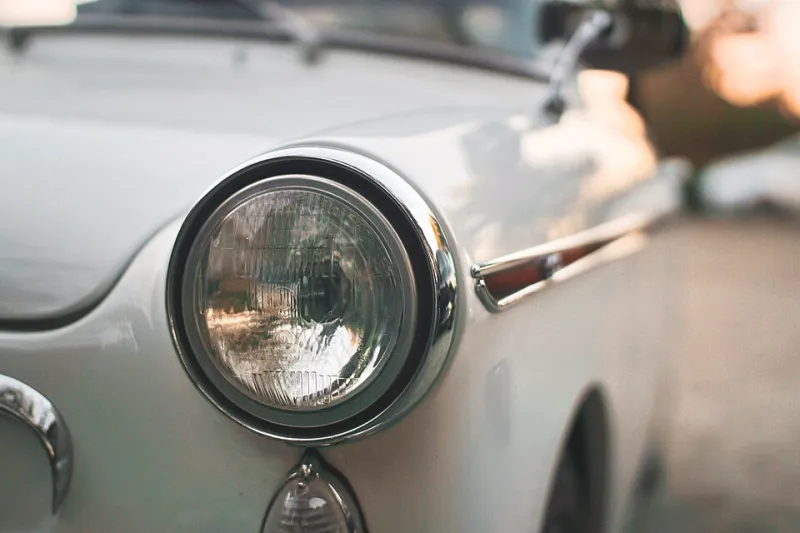
Photo: Erwan Hesry erwanhesry, CC0, via Wikimedia Commons
The 4:45am Handover
Sarah has been a nurse in Coventry for eleven years, and for the last three of those she's worked a rotating night shift. Her routine is brutal in its consistency: out of the house at a quarter to five, on the ward by six, home somewhere around eight in the evening depending on handover. In winter, that means she leaves in the dark and returns in the dark. In summer, she catches maybe fifteen minutes of low morning light on the drive in — squinting through a windscreen, not admiring paintwork.
Which raises an obvious question. When she contacted us about a full ceramic coating for her 2019 Ford Mondeo, our first instinct was to check she'd filled in the form correctly.
"People say it to me all the time," she told us when she dropped the car off. "'Why bother? You'll never see it.' My mum said it. My colleagues said it. I've thought about it a lot, actually."
The Case Against (And Why It's Wrong)
Let's be fair to the sceptics, because the argument sounds reasonable. Detailing is, in part, about how a car looks. If the owner never sees the car in daylight, they're paying for a shine they can't perceive. It's like buying a framed print for a windowless room.
But that argument only holds if you believe protection is purely aesthetic. It isn't — and this is where the night-shift driver is arguably getting more value from a ceramic coating than the weekend enthusiast whose car lives in a heated garage.
Sarah's Mondeo parks on an open-air hospital staff car park for twelve hours at a stretch. Tree sap, bird lime, industrial fallout from the A-road nearby, frost, and — the big one — standing water. When you leave for work at 4:45am in November, you don't have the luxury of waiting for the rain to stop, or towelling the car down before you drive off. Water sits, dries, and etches.
What the Coating Actually Does for Her
We fitted a two-layer ceramic coating to the Mondeo over a day and a half, including a single-stage machine polish to strip back three years of automatic car wash swirls. The paint came up genuinely well underneath — Ford's paint in this era responds nicely once you get the contamination off.
But the real benefit for Sarah isn't the gloss. It's this:
- Rain does the cleaning. The hydrophobic surface means road grime lifts with the water rather than bonding to the paint. Her car self-cleans to a degree every time it rains on the motorway.
- No more spiral car washes. She was using a local automatic wash fortnightly out of guilt. Those things were eating her clear coat. Now she books a proper hand wash every six to eight weeks and it takes half the time because nothing sticks.
- Bird lime wipes off. On a hospital car park under trees, this matters. On an uncoated bonnet, a bird dropping left for twelve hours can etch permanently. On a ceramic surface, it wipes away with a damp cloth.
- It'll still be there when she sells. Whenever that day comes, the paint underneath will be worth preserving.
The Daylight Test
Here's the bit we didn't expect. When the coating had cured and we wheeled the Mondeo outside, we took photos and sent them over. Sarah's response: she set an alarm for 7:20am — after a night off — walked out to the car park, and texted us a photo of the sunrise hitting the bonnet.
"First time I've properly seen this car since 2021," she wrote.
So no, she doesn't see the shine every day. She sees it on days off, on the odd early summer morning, and in the reflection of shop windows when she nips out at lunchtime before a shift. That's enough. And between those glimpses, the coating is quietly doing the unglamorous work — repelling water, shedding dirt, buying her paint time.
Who Actually Needs This Most
There's a pattern in this job: the people who benefit most from protection are usually the ones who assume it's not for them. The shift worker, the school-run parent, the motorway commuter — their cars take the worst of British conditions precisely because they're always out, always moving, never sheltered.
The garage queen with a soft dust cover doesn't need a ceramic coating to survive. Sarah's Mondeo does.
If you're reading this on your phone at 4:50am in a staff car park, waiting for the heater to warm up — this one's for you. The shine isn't pointless just because you can't stand and admire it. It's doing its best work in the dark, exactly like you are.