Twelve Hours, One Bonnet: A Blow-by-Blow Account of a Full Paint Correction Day
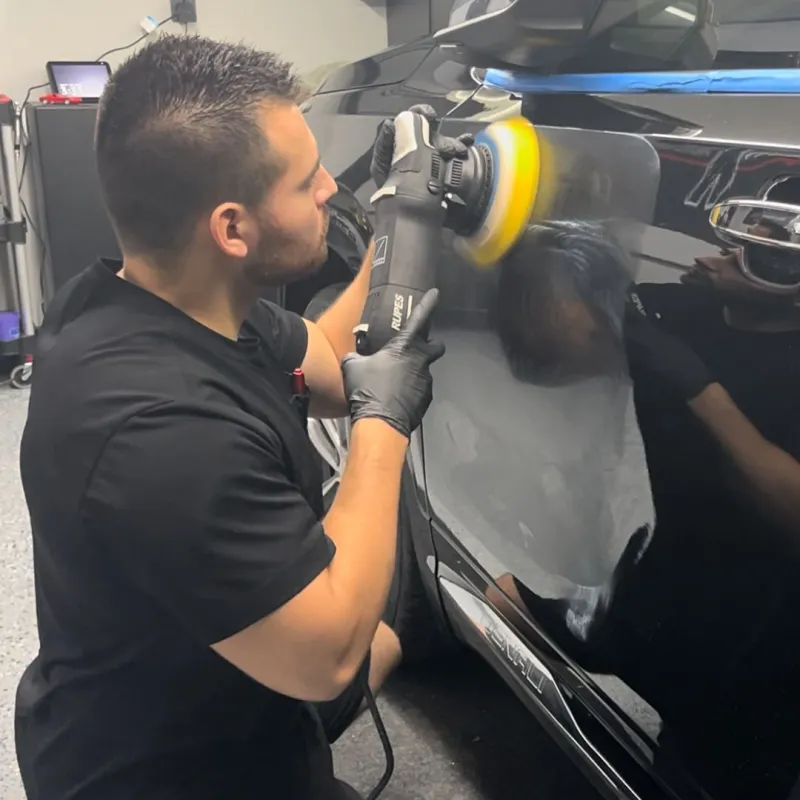
Photo: car polisher machine polishing paint correction detailing studio, via images.squarespace-cdn.com
Paint correction is one of those phrases that gets banded about so much it's lost its meaning. So we thought we'd do something about it: follow a single car through a full correction day at the Glorious Detailing studio, hour by hour, and show you exactly where the time goes.
The car: a 2019 BMW 3 Series, silver, one owner, mostly motorway miles. Lovely motor, but the paint told a story of hand car washes and hard brushes. Swirl marks everywhere, buffer trails on the bonnet, and a hologram effect under sunlight that made the roof look like a fairground ride.
Hour One: The Inspection (Where Most of the Decisions Happen)
Before a single pad touches paint, the car gets washed, decontaminated and wheeled under proper lighting. Then comes the paint depth gauge.
We took readings across every panel — around 20 measurements per door, more on the bonnet. Silver BMW paint is usually consistent, and this one was: readings between 105 and 115 microns across the board, which told us there was plenty of clear coat to work with safely. That data dictates everything: how aggressive we can be, which panels need caution, and whether a two-stage correction is even sensible.
Red flag: any detailer who quotes you a correction without measuring paint depth first is guessing. Ask to see the readings.
Hours Two and Three: Prep, Tape and Test Spots
With the car spotless — chemically decontaminated, tar removed, clayed — the masking tape goes on. Rubbers, badges, plastics, edges. It's tedious and it matters, because a spinning pad doesn't care what it touches.
Then come the test spots. On the bonnet, we tried a finishing polish with a soft pad first; the swirls barely moved. So we stepped up to a cutting compound on a medium pad, worked a small section, and checked it under the inspection light. Perfect — that combination would do the job without going too aggressive.
Hours Four to Eight: The Machine Work
This is the part people imagine, and it is genuinely the bulk of the day. Panel by panel, section by section, the polisher works in slow, overlapping passes. Bonnet. Roof. Boot lid. Each door. Each wing. Then a second pass with a finer polish to refine the finish and remove any micro-marring from the cutting stage.
There's no shortcut here. A roof alone takes the best part of an hour done properly. Every panel gets blown out and wiped down before moving on, because compound dust left on the surface hides defects you'd otherwise catch.
Red flag: a full correction quoted at two or three hours. Physically impossible on a car with genuine swirl damage. What you'd be getting is a gloss-enhancing glaze that hides the problem until the third wash.
Hour Nine: The Light Test
We move the car outside (or under our colour-matched lighting, depending on the sky — this is Britain, after all) and go over it panel by panel with the sun gun. This is where you catch the stragglers: a faint buffer trail near the driver's door handle, a stubborn scratch on the passenger wing. Back on the polisher for targeted work. No panel gets signed off until it's clean under direct light.
Hours Ten and Eleven: Panel Wipe and Coating
Before any ceramic coating goes on, the paint gets a panel wipe — an IPA-based solution that strips every last trace of polish oils. Coating over polish residue is like varnishing over dust; it'll look fine for a fortnight then fail.
Then the ceramic coating, applied panel by panel in controlled conditions, levelled and left to flash. Two coats on the lower half of the car and the bonnet, where the stone chips and winter grime concentrate.
Hour Twelve: The Reveal
Final inspection, tyre dressing, glass cleaned, interior given a once-over. Then the customer comes in.
The reaction is why we do this. The same silver 3 Series that arrived looking tired left with paint that had genuine depth again — no swirls under the lights, just reflections. The owner stood there for a good minute without saying anything, then asked if it was normal for the paint to look wet when it was dry.
Yes. Yes, it is.
What You're Actually Paying For
Twelve hours sounds like a lot until you break it down. You're not paying for a machine whizzing over a bonnet; you're paying for measurement, judgement, patience and the discipline to do the unglamorous prep properly. That's the difference between a correction and a cover-up — and it's the difference we build every day at Glorious Detailing.